
Last Updated: December 19, 2025
Your restaurant’s reputation hinges on pristine table linens, spotless napkins, and fresh kitchen towels—yet managing commercial laundry in-house drains staff time, inflates utility costs, and often delivers inconsistent results. In Dallas’ competitive dining scene, where customer experience determines repeat business, choosing the right restaurant linen cleaning service Dallas pickup provider can transform your operations from chaotic to streamlined while cutting overhead by thousands annually.
Dallas restaurant owners face a critical decision: invest in costly industrial washers and dedicate staff hours to laundry, or partner with specialized commercial linen services offering convenient pickup and delivery. This guide examines proven strategies, common pitfalls, and emerging trends in Dallas’ restaurant laundry service market to help you make informed decisions that boost efficiency and profitability.
Quick Answer: What You Need to Know
Restaurant linen cleaning services in Dallas with pickup typically charge $0.12-$0.18 per napkin and $0.13-$0.20 per kitchen towel, offering scheduled pickups 2-3 times weekly. Modern providers eliminate contracts, maintenance fees, and inventory minimums that traditional companies imposed, delivering clean linens within 24-48 hours while handling sorting, washing, drying, and pressing.
Key Takeaways:
- Per-item pricing (12-18¢ per napkin) typically saves 30-40% versus in-house laundry
- Pickup services handle inventory management, eliminating storage concerns
- Flexible providers waive contracts and maintenance fees that legacy companies impose
- Professional cleaning extends linen life by 50% through proper treatment
- Reliable delivery schedules prevent stock-outs during peak dining periods
Understanding Dallas Restaurant Linen Service Options
Dallas’ commercial linen industry has evolved dramatically since family-owned operations like Metro Linen Service (founded 1947) and Division Laundry (established 1939) first served local restaurants. Today’s market features both established regional providers and innovative newcomers challenging traditional business models with transparent pricing and flexible terms.
Traditional vs. Modern Service Models
Legacy providers typically operate on rental models requiring multi-year contracts, “pars” (minimum inventory levels), and maintenance fees that inflate monthly costs. According to industry analysis, these companies historically dominated Dallas through established relationships and comprehensive service territories across North Texas.
Modern disruptors introduced around 2020-2021 revolutionized the market with straightforward per-item pricing, no-contract flexibility, and crisis-responsive service—particularly valuable during pandemic-era restaurant closures. Companies like ALTLinen, founded by Dallas entrepreneurs in the Design District, offered transparent rates and suspended billing during temporary shutdowns, earning loyalty from establishments like Encina in Bishop Arts and multiple outlets at Thompson Hotel’s National development.
What Pickup Services Include
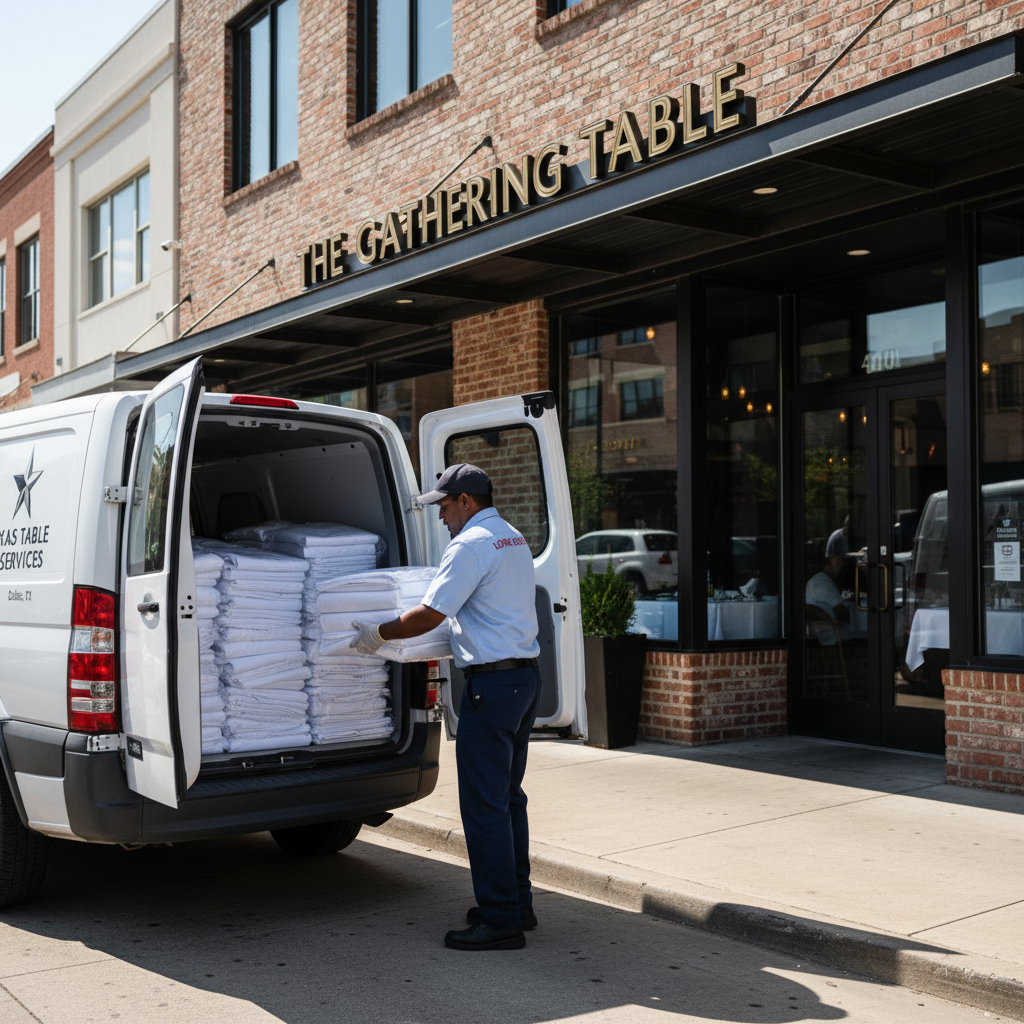
Comprehensive restaurant linen cleaning service Dallas pickup solutions handle every aspect of textile management. Services typically include scheduled pickups (2-3 times weekly), professional washing using commercial-grade equipment, stain treatment, pressing/finishing, quality inspection, and delivery of fresh inventory. Providers supply bags or bins for soiled linens, track pieces through barcoding systems, and replace damaged items automatically.
Beyond tablecloths and napkins, full-service providers offer towel and linen service Dallas coverage for kitchen towels, bar mops, aprons, and chef coats. Many also integrate uniform and workwear cleaning service for front-of-house and back-of-house staff, consolidating multiple vendors into one relationship.
Pricing Structures Explained
| Item Type | Typical Cost Range | Monthly Volume (50-seat restaurant) |
|---|---|---|
| White napkins | $0.12-$0.15 | 1,200-1,800 pieces |
| Colored napkins | $0.14-$0.18 | 1,200-1,800 pieces |
| Kitchen towels | $0.13-$0.20 | 400-600 pieces |
| Tablecloths (standard) | $0.85-$1.50 | 200-300 pieces |
| Aprons | $0.35-$0.55 | 150-250 pieces |
A typical 50-seat Dallas restaurant using full linen service might spend $600-$900 monthly on napkins, $80-$120 on kitchen towels, and $170-$450 on tablecloths—totaling approximately $850-$1,470 monthly depending on dining volume and linen quality. This compares favorably to in-house costs exceeding $2,000 when factoring equipment, utilities, labor, and replacement inventory.
Common Mistakes Restaurant Owners Make
Selecting the wrong linen service provider or mismanaging the relationship creates operational headaches and unexpected costs. Understanding frequent pitfalls helps Dallas restaurateurs avoid expensive mistakes that drain resources and compromise service quality.
Signing Long-Term Contracts Without Trial Periods
Traditional providers often lock restaurants into 3-5 year agreements with automatic renewal clauses and substantial early termination fees. These contracts made sense when linen supply required significant capital investment, but modern alternatives offer month-to-month flexibility. According to restaurant operators who switched to newer providers, rigid contracts prevented them from addressing quality issues or negotiating better rates as their business evolved.
Smart restaurateurs now request 30-60 day trial periods before committing to any agreement. This allows evaluation of pickup reliability, cleaning quality, customer service responsiveness, and actual costs versus quoted estimates. Industry experts recommend documenting specific performance standards in any contract, including replacement timelines for damaged items and guaranteed delivery windows.
Underestimating Inventory Requirements
Restaurants frequently miscalculate linen pars (active inventory levels) needed to maintain operations between pickups. Insufficient pars force staff to ration linens during busy shifts or resort to emergency laundering in inadequate on-site equipment. Conversely, excessive inventory inflates costs unnecessarily when providers charge rental fees per piece in circulation.
Industry best practices suggest maintaining 3-4 pars for napkins and towels when receiving twice-weekly service: one par in use, one in transit to the laundry, one being cleaned, and one spare for unexpected volume spikes. Weekend-heavy establishments may require additional buffer inventory to cover Friday-Sunday rushes before Monday pickups.
Ignoring Hidden Fees and Billing Complexity
Legacy linen companies gained notoriety in Dallas for complex billing that included maintenance fees, loss replacement charges, fuel surcharges, and minimum weekly spend requirements. Restaurant owners discovered monthly invoices far exceeding initial quotes due to percentage-based fees and undisclosed charges. D Magazine’s coverage of the Dallas market pre-2021 described this as a “linen cartel” holding operators “hostage” through opaque pricing.
Savvy operators now demand itemized quotes listing per-piece costs, delivery frequencies, and any additional fees upfront. They compare total projected monthly costs across providers rather than focusing solely on per-napkin rates. Transparency in billing reflects overall service quality and provider integrity according to experienced Dallas restaurant consultants.
Best Practices for Choosing Your Linen Partner
Selecting the right restaurant linen cleaning service Dallas pickup provider requires evaluating operational fit, financial terms, and long-term reliability. These proven strategies help identify partners who enhance rather than complicate your restaurant operations.
Evaluate Response Time and Customer Service
When Encina’s chef Matt Balke needed linen service for his Bishop Arts restaurant opening in 2020, ALTLinen responded with a site visit, samples, and detailed invoice within 15 minutes—contrasting sharply with legacy providers requiring days for quotes. This responsiveness proved critical during unpredictable pandemic operations when dining room capacities fluctuated weekly.
Test potential providers’ responsiveness by requesting emergency pickups or expedited delivery scenarios during initial conversations. Companies with dedicated account representatives, 24/7 communication channels, and flexible scheduling demonstrate commitment to hospitality industry demands. For comprehensive insights on selecting commercial partners, review this guide on professional linen cleaning service solutions.
Verify Cleaning Standards and Certifications
Professional linen services should meet Textile Rental Services Association of America (TRSA) hygienically clean standards, which specify water temperatures, detergent concentrations, and microbial reduction targets. According to the Centers for Disease Control and Prevention, commercial laundry facilities must maintain specific protocols for sanitizing textiles used in food service environments.
Request facility tours or documentation of cleaning processes, water treatment systems, and quality control procedures. Top Dallas providers use ozone treatment systems, high-efficiency washers reaching 160°F+ temperatures, and automated sorting technology minimizing cross-contamination. They also maintain separate processing streams for kitchen textiles versus dining room linens to prevent grease transfer.
Calculate Total Cost of Ownership
True service value extends beyond per-item rates to include inventory management, staff time savings, utility reductions, and equipment avoidance. Research shows that outsourcing laundry services can save businesses time and money through economies of scale impossible for individual restaurants to achieve.
Compare monthly service costs against in-house alternatives accounting for commercial washer/dryer purchases ($15,000-$30,000), installation and ventilation upgrades ($5,000-$12,000), water/sewer/gas consumption ($400-$800 monthly), detergents and chemicals ($150-$300 monthly), labor hours (10-15 hours weekly at $15-$20/hour), and linen replacement budgets. Most Dallas restaurants discover outsourcing delivers 35-50% savings while freeing staff for revenue-generating activities.
How to Implement Restaurant Linen Service
Transitioning to professional linen pickup requires strategic planning to avoid service disruptions during the changeover. Follow these steps for seamless implementation that maintains operational continuity while maximizing service benefits.
Step 1: Audit Current Linen Usage and Costs
Document current inventory levels, weekly consumption rates, and all associated costs for 4-6 weeks to establish baseline data. Count napkins, tablecloths, kitchen towels, and other textiles in circulation. Track laundry-related expenses including utilities, supplies, staff time, and equipment maintenance. Calculate replacement costs for worn items over the past year. This comprehensive audit provides comparison metrics for evaluating service proposals.
Step 2: Request Detailed Proposals from Multiple Providers
Contact 3-5 Dallas restaurant linen services with pickup capabilities, providing your usage data for accurate quotes. Request itemized pricing, pickup schedules, par level recommendations, contract terms, and customer references from similar establishments. Ask specifically about service during major holidays, severe weather, and unexpected volume spikes. Verify service territories to ensure your location falls within reliable delivery zones.
Step 3: Schedule Overlap Period for Transition
Plan a 1-2 week overlap where the new provider delivers initial inventory while you phase out existing systems. This buffer prevents shortages if delivery timing differs from expectations or if initial par calculations need adjustment. Schedule the transition during slower business periods rather than holiday weeks or special event seasons when linen demands peak.
Step 4: Train Staff on New Procedures
Brief all team members on sorting procedures, pickup schedules, and communication protocols with the service provider. Designate a linen coordinator responsible for verifying deliveries, reporting quality issues, and managing inventory levels. Establish clear systems for separating heavily soiled items requiring special treatment and documenting damaged pieces for replacement tracking.
Frequently Asked Questions
How often should restaurant linens be picked up in Dallas?
Most Dallas restaurants schedule pickups 2-3 times weekly depending on dining volume. High-volume establishments may require daily service, while smaller cafes manage with twice-weekly pickups. Providers typically offer flexible scheduling that adjusts seasonally as business needs change.
What happens if the linen service misses a scheduled pickup?
Reputable providers maintain backup systems including substitute delivery personnel and emergency contact protocols. Service agreements should specify guaranteed response times and compensation for missed pickups that disrupt operations. Modern companies often offer real-time tracking and automated notifications of delivery status.
Do I need to purchase linens or does the service provide them?
Most Dallas restaurant linen cleaning services offer both rental programs (provider-owned inventory) and “yours-to-use” arrangements where they launder customer-owned textiles. Rental models eliminate upfront capital costs while yours-to-use arrangements may reduce per-piece rates. Discuss both options to determine which fits your financial situation and aesthetic preferences.
Can linen services handle specialty items like custom-embroidered napkins?
Yes, professional providers process specialty textiles including custom-embroidered pieces, high-thread-count fabrics, and colored linens requiring specific temperature and detergent protocols. Communicate special handling requirements during setup to ensure appropriate care that preserves embroidery, colors, and fabric integrity.
How do I handle linen service during temporary restaurant closures?
Flexible providers pioneered during the 2020-2021 pandemic allow service suspension without penalties during temporary closures for renovations, seasonal breaks, or emergencies. Some companies offered free storage of inventory during COVID closures, demonstrating partnership commitment. Clarify closure policies before signing agreements to avoid paying for unused service.
Conclusion
Selecting the right restaurant linen cleaning service Dallas pickup provider represents a strategic decision affecting operational efficiency, customer experience, and profitability. Modern Dallas restaurants benefit from unprecedented choice between established regional companies and innovative newcomers offering transparent pricing without restrictive contracts.
Successful partnerships begin with thorough evaluation of service capabilities, pricing structures, and operational fit. By avoiding common mistakes like overlooking hidden fees or underestimating inventory needs, restaurateurs position their businesses for streamlined linen management that enhances rather than complicates daily operations. The transition from in-house laundering or inflexible legacy providers to responsive modern services typically delivers 35-50% cost savings while freeing staff to focus on guest service excellence.
As Dallas’ dining scene continues evolving through December 2025 and beyond, commercial linen services remain essential partners for restaurants committed to maintaining impeccable presentation standards. The market’s shift toward flexibility, transparency, and customer-centric service models empowers operators to demand excellence from providers—ultimately benefiting diners who experience consistently high-quality restaurants throughout the Dallas-Fort Worth metroplex.
Sources and References
This article incorporates research from historical industry analyses of commercial linen services dating to the 1930s-1940s, documentation of Dallas-based providers including Metro Linen Service (founded 1947), Division Laundry (established 1939), and modern market entrants like ALTLinen (founded circa 2020). Additional insights reference Centers for Disease Control and Prevention guidelines on commercial laundry sanitation standards and Textile Rental Services Association of America industry practices. Market pricing data reflects December 2025 Dallas restaurant industry standards based on per-item rates documented by local service providers.