
Last Updated: December 19, 2025
Are towering utility bills and laundry staff costs eating into your gym’s profits? For fitness centers across Dallas, TX, managing the endless cycle of sweaty towels, yoga mats, and uniforms has become one of the most expensive operational challenges. While members expect crisp, fresh linens with every visit, the hidden costs of maintaining an in-house laundry operation can cripple your bottom line—often consuming 15-20% of monthly operating expenses.
What if you could slash those costs while actually improving service quality? We’ve seen dozens of Dallas fitness facilities transform their operations by rethinking commercial laundry strategies. From boutique studios near Uptown to large-scale facilities in the Medical District, the shift toward professional laundry services and equipment leasing is reshaping how gyms manage one of their most labor-intensive tasks.
Quick Answer: The Cost-Saving Power of Commercial Laundry
Commercial laundry services and equipment leasing reduce gym operational costs by eliminating large equipment purchases ($10,000+ per machine), cutting utility bills through energy-efficient machines, removing staff payroll expenses, and providing maintenance-free solutions with same-day repairs—allowing Dallas gyms to redirect resources toward member services and facility growth.
Key Takeaways:
- Equipment leasing avoids $10,000+ upfront capital expenditures per machine
- Outsourcing eliminates labor costs including payroll, taxes, and training
- Energy-efficient machines cut water and electricity consumption by 30-40%
- Professional services scale from 10 to 10,000 lbs weekly without equipment upgrades
- Maintenance and repairs are included, preventing costly downtime
Understanding Laundry Costs for Dallas Fitness Centers
Before exploring how commercial laundry saves money for gyms in Dallas, TX, it’s essential to understand the true cost burden of in-house laundry operations. Most gym owners underestimate these expenses because they’re distributed across multiple budget categories—equipment depreciation, utilities, labor, maintenance, supplies, and space allocation.
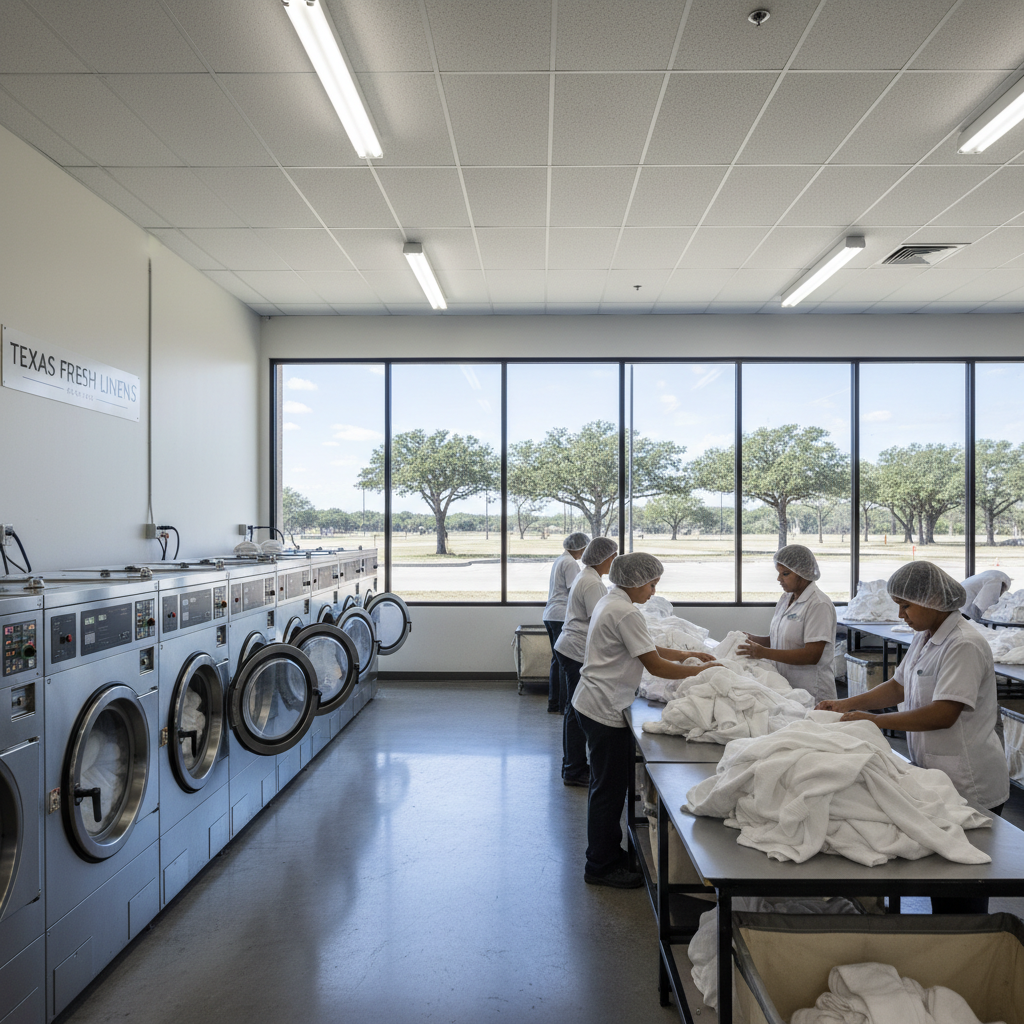
When our teams work with fitness facilities near the intersection of McKinney Ave and Lemmon Ave in Uptown, we consistently find that laundry operations consume 15-20% of monthly operating budgets. A mid-sized gym processing 500-1,000 pounds of towels and linens weekly faces substantial hidden costs that compound over time.
The Hidden Expenses of In-House Laundry
Commercial-grade washers and dryers require initial investments exceeding $10,000 per machine. For a facility requiring three washers and two dryers to handle daily volume, you’re looking at $50,000+ before installation, hookups, and ventilation modifications. These machines depreciate rapidly in high-volume environments, requiring replacement every 5-7 years.
| Cost Category | In-House Monthly Cost | Commercial Solution |
|---|---|---|
| Equipment Purchase/Lease | $800-1,200 | Flat-rate leasing with maintenance |
| Utilities (Water/Electricity) | $600-900 | Included in service or eco-efficient |
| Labor (Staff + Payroll Taxes) | $2,400-3,600 | Eliminated through outsourcing |
| Detergents/Supplies | $200-400 | Included in service pricing |
| Repairs/Maintenance | $150-500 | Covered at no extra charge |
| Total Monthly | $4,150-6,600 | $2,000-3,500 |
Dallas-Specific Operational Challenges
Dallas’s hot climate creates unique challenges for gym laundry operations. Summer temperatures exceeding 100°F drive air conditioning costs higher when dryers generate additional heat inside facilities. Our crews servicing gyms near Victory Park and the American Airlines Center report that inadequate ventilation in laundry rooms can raise HVAC costs by 20-30% during peak summer months.
Additionally, Dallas’s hard water requires more detergent and causes faster equipment degradation, increasing both supply costs and maintenance frequency. Commercial laundry providers address these regional factors with specialized equipment and water treatment systems optimized for North Texas conditions.
Common Mistakes Gyms Make with Laundry Operations
We’ve identified recurring mistakes that prevent Dallas fitness facilities from optimizing their laundry operations. Understanding these pitfalls helps gym owners make informed decisions about why outsourcing laundry services can save your business time and money.
Underestimating True Operational Costs
Most gym owners calculate only direct expenses like equipment and detergent, ignoring hidden costs such as staff training, equipment downtime, inventory replacement, and opportunity costs. A broken washer during peak membership season (January-March) can force emergency towel purchases costing thousands while repairs take days or weeks.
When facilities near Lower Greenville experience equipment failures, the scramble to maintain service standards often results in rush delivery charges for rental towels at 3-4 times normal rates. Professional commercial laundry services eliminate these emergency scenarios through guaranteed service levels and backup capacity.
Purchasing Instead of Leasing Equipment
The upfront capital expenditure for commercial laundry equipment diverts resources from member-facing improvements like new cardio equipment, facility upgrades, or marketing initiatives. Leasing programs offer flat-rate monthly pricing that includes installation, maintenance, and repairs—converting unpredictable variable costs into manageable fixed expenses.
Failing to Plan for Growth and Seasonal Demand
According to research on New Year’s resolutions, gym memberships surge 30-40% in January. In-house laundry systems sized for average volume quickly become overwhelmed during these spikes, forcing service reductions that frustrate new members during their critical first month. Commercial laundry services scale seamlessly from 500 to 5,000 pounds weekly without equipment changes.
Best Approaches for Cost-Effective Gym Laundry in Dallas
Dallas fitness facilities have multiple options for optimizing laundry operations. The right solution depends on facility size, member volume, available space, and growth projections. We recommend evaluating these proven approaches based on your specific circumstances.
Full-Service Outsourcing with Pickup and Delivery
Complete outsourcing represents the most comprehensive cost-saving solution. Professional services handle everything from pickup to folding and delivery, eliminating all equipment, utility, labor, and supply costs. Gyms in Deep Ellum and the Arts District favor this approach because it requires zero floor space and staff time.
Pricing structures typically use volume-based tiers with discounts for weekly bulk pickups. For example, facilities processing 500-1,000 pounds weekly might pay $1.50-2.00 per pound, while higher volumes drop to $1.00-1.50 per pound. The initial cost appears higher than in-house operations, but comprehensive analysis including eliminated expenses reveals 25-35% savings.
Equipment Leasing with Professional Maintenance
For gyms preferring on-site control, equipment leasing programs provide commercial-grade machines without capital expenditure. Dallas providers offer turnkey solutions including room design, installation, high-efficiency washers and dryers, and guaranteed maintenance response within 24 hours.
Modern eco-efficient machines reduce water consumption by 40% and electricity usage by 30% compared to older commercial models, directly lowering utility bills. Stackable units maximize floor space efficiency—critical for facilities near Klyde Warren Park where real estate comes at a premium. Touchless digital payment systems streamline revenue collection from members who prefer full-service towel rental add-ons.
Hybrid Solutions for Multi-Location Operators
Gym chains with multiple Dallas locations benefit from hybrid approaches that centralize laundry at one facility or use specialized commercial laundry providers offering multi-site management. This strategy consolidates volume for better pricing while maintaining consistent quality across all locations. Similar to how hotels manage linens through hotel and Airbnb linen service in Dallas, fitness chains can achieve economies of scale.
How to Transition to Commercial Laundry Services
Implementing a new laundry strategy requires careful planning to avoid service disruptions. Follow this proven process to ensure smooth transitions while maximizing cost savings.
Step 1: Audit Your Current Laundry Costs and Volume
Document all laundry-related expenses for 90 days including equipment depreciation, utilities, labor hours, supplies, maintenance, and emergency costs. Track weekly volume in pounds to establish baseline requirements. Our assessments with facilities near the intersection of Fitzhugh Ave and Hall St reveal that most gyms underestimate actual volume by 20-30%.
Step 2: Request Proposals from Multiple Providers
Contact at least three commercial laundry providers for detailed quotes. Specify your average weekly volume, peak demand periods, pickup frequency preferences, and any special requirements like eco-friendly detergents or antimicrobial treatments. Request references from other Dallas fitness facilities they serve.
Compare proposals based on total cost, service guarantees, backup capacity, response times for issues, and contract flexibility. The lowest price rarely delivers the best value—focus on reliability and quality that protects your member experience. Learn more about our approach to commercial laundry partnerships.
Step 3: Pilot Test Before Full Commitment
Negotiate a 30-60 day trial period with your selected provider. Start with a portion of your laundry volume while maintaining in-house backup capacity. Monitor quality, turnaround times, pickup reliability, and actual costs versus projections. Gather staff and member feedback about towel quality and availability.
Step 4: Optimize Operations and Reallocate Resources
Once you’ve transitioned fully, repurpose former laundry space for revenue-generating activities like personal training areas, retail displays, or additional equipment. Redirect staff hours toward member services, sales, and facility cleanliness. Understanding the types of commercial laundry services available helps you continue optimizing over time.
Frequently Asked Questions
How much can gyms actually save with commercial laundry services?
Dallas gyms typically save 25-40% compared to in-house operations when accounting for all costs. A mid-sized facility spending $5,000 monthly on in-house laundry can reduce expenses to $3,000-3,500 through professional services, saving $18,000-24,000 annually while improving quality and reliability.
What happens if my commercial laundry service misses a pickup?
Reputable providers include service-level agreements guaranteeing pickup schedules with penalties for failures. Most maintain backup capacity and emergency response protocols. During your evaluation, ask about contingency plans and review their track record with current clients. Reliable services maintain 99%+ on-time pickup rates.
Is equipment leasing or full outsourcing better for smaller gyms?
Facilities under 5,000 square feet or processing less than 300 pounds weekly typically benefit most from full-service outsourcing. This eliminates space requirements and ensures cost-effectiveness at lower volumes. Leasing becomes advantageous for facilities processing 500+ pounds weekly with available laundry room space.
How do I handle the transition period with members?
Communicate proactively through email, social media, and facility signage about upcoming improvements to towel service. Most members notice quality improvements with professional laundry—brighter whites, softer textures, and more consistent availability. Frame the change as an enhancement to their experience rather than a cost-cutting measure.
Are commercial laundry services environmentally friendly?
Professional laundry operations use significantly less water and energy per pound than small-scale in-house systems due to high-efficiency equipment and optimized processes. Many Dallas providers offer eco-friendly detergent options and participate in sustainability certification programs. Request environmental impact data during your evaluation process.
Conclusion: Redirecting Resources Toward Growth
Understanding how commercial laundry saves money for gyms in Dallas goes beyond simple cost comparisons. The strategic advantage comes from converting unpredictable variable expenses into manageable fixed costs while freeing capital, space, and staff time for member-facing improvements that drive revenue growth.
As Dallas’s fitness industry continues expanding with new facilities opening throughout neighborhoods from Oak Lawn to Lake Highlands, operational efficiency separates thriving gyms from struggling competitors. Professional laundry services and equipment leasing provide scalability that matches your growth trajectory without requiring major capital investments during expansion.
The question isn’t whether commercial laundry solutions save money—the data clearly demonstrates 25-40% cost reductions for most facilities. The real question is whether you’re ready to redirect those savings toward amenities, marketing, and services that attract and retain members in Dallas’s competitive fitness market. Take the first step by auditing your current laundry costs and requesting proposals from qualified providers serving the Dallas area.
Sources and References
- Wikipedia – New Year’s Resolutions and Gym Membership Trends
- Industry analysis of commercial laundry cost structures for fitness facilities
- Dallas commercial laundry provider service specifications and pricing models
- U.S. Small Business Administration data on equipment leasing versus purchasing
Disclaimer: This article provides general information about commercial laundry services for educational purposes. Actual costs and savings vary based on facility size, volume, location, and specific provider terms. Consult with qualified commercial laundry providers for customized assessments and proposals.